
Greek Fish! Bianchi Fishes off Leros
An isolated island, three star chefs, and plenty of fish. Luca Bianchi inspects an aquaculture farm in Greece.
By Kathia Baltisberger | July 5, 2024 – 06:00 AM
It’s an excellent idea: Instead of moping around in the constant rain here, Luca Bianchi, co-CEO of Bianchi AG, took a handful of star chefs and flew with them to a secluded Greek island. However, this wasn’t a vacation; the agenda included visiting a very special fish farm. “Kito is a fish producer that breeds sea bass, sea bream, amberjack, and kingfish,” explains Luca Bianchi. The company has been around for ten years. “We were their first customer back then and have been exclusively selling their products in Switzerland via our distribution partner iFood ever since.” It was high time to take a closer look at how these quality fish are produced.
Incredible Bays: The island of Leros is part of the Dodecanese archipelago.
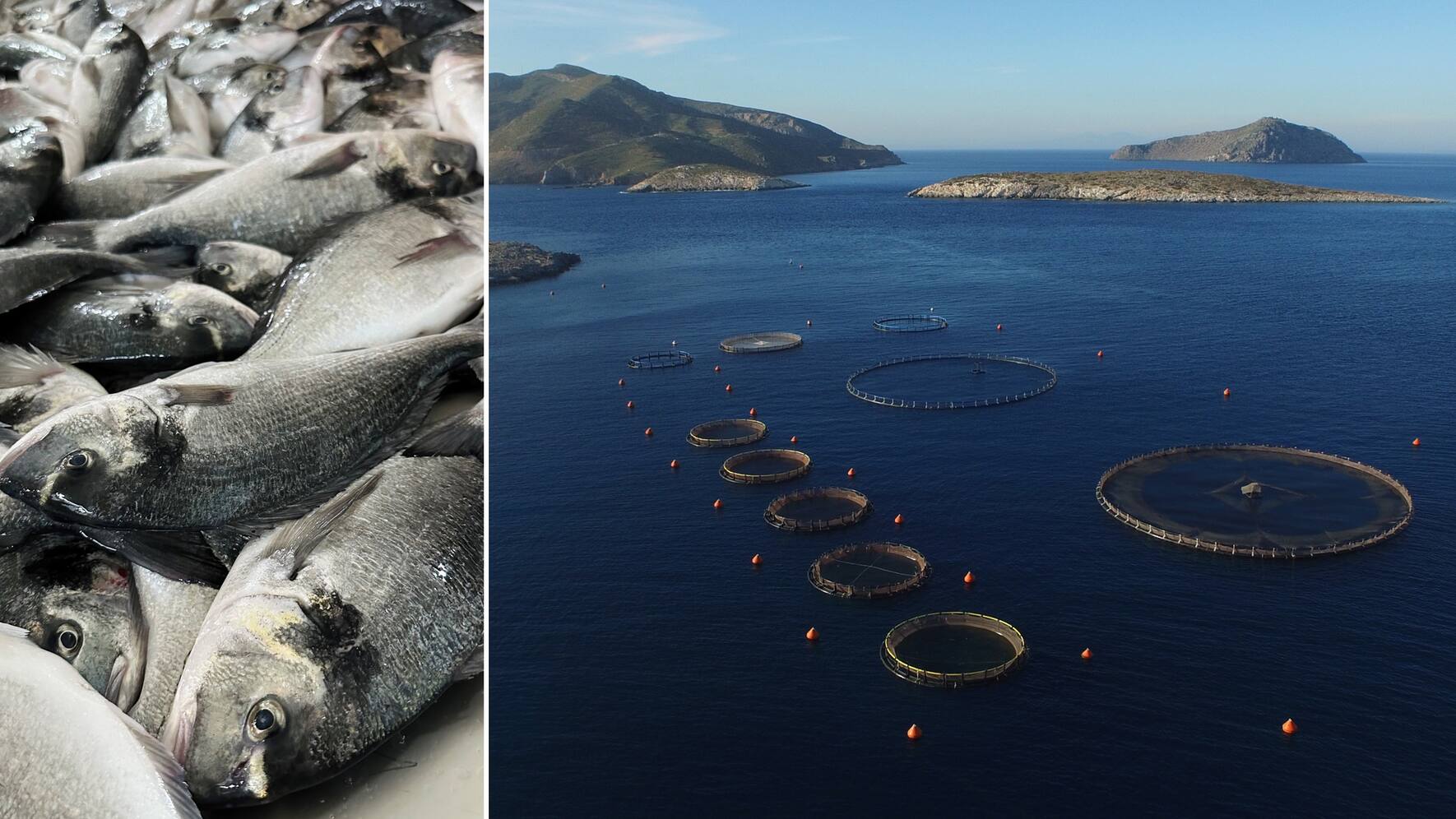
The Fish Farm: Located about 400 meters off the coast of Leros.
Three Chefs on Board: Accompanying this business trip were Stefan Lünse (Lenkerhof Gourmet Spa Resort), Mattias Roock (Castello del Sole, Ascona), and Jose Severino (Barranco, Zurich). The fish farm is situated on Leros, a small island belonging to the Dodecanese group. Kito’s CEO, Dimitri Papapanagiotou, personally picked up the distinguished group for the tour. The Greek is a marine biologist, entrepreneur, and a notable figure in the aquaculture industry. “He was the first to operate an aquaculture farm in Greece,” says Bianchi. The key to successful farming: “Without perfect water quality, there is no quality in the fish,” says Papapanagiotou. Leros is particularly suitable as a production site because the island is far from major cities, and there are no rivers contaminated with pesticides flowing into the sea. The water around the island is crystal clear. The farming enclosures are located about 400 meters from the shore in the sea. The surrounding archipelago buffers larger waves, providing relatively calm conditions for the fish. This calm sea has another advantage: very little feed is lost during feeding.
The Chefs on Site: Stefan Lünse (Lenkerhof Gourmet Spa Resort), Mattias Roock (Castello del Sole, Ascona), and Jose Severino (Barranco, Zurich).
Perfect Water Quality: Essential for successful fish farming.
Especially Large Fish: The enclosures mainly house sea bass and sea bream. Amberjack is a niche product, and kingfish is on the rise. Approximately 1,500 tons of fish are slaughtered annually—a fraction of what major meat producers worldwide produce each year. For Bianchi AG, sea bass is particularly interesting because “our customers want the largest fish possible, around three kilograms and more. However, a fish of this size needs about six to seven years to grow,” says Bianchi. In comparison: a chicken lives only about 42 days, and a calf eight weeks.
Organizer of the ‘Study Trip’ to Greece: Co-CEO Luca Bianchi.
Dry Aging Fish: Fish can also be dry-aged, hanging for up to 15 days.
Underwater Jungle Landscapes: The Greek farm also scores points in terms of sustainability and animal welfare. The animals have plenty of space. There is 1% fish to 99% water. Producing one kilogram of fish requires only two kilograms of feed. “These are top values when compared to the meat industry,” says Bianchi. But for it to work, the ecosystem must be intact.
 English
  German